
A Time for Discernment
Reflections from the Day of Discernment
By The Rev. Jerry Drino
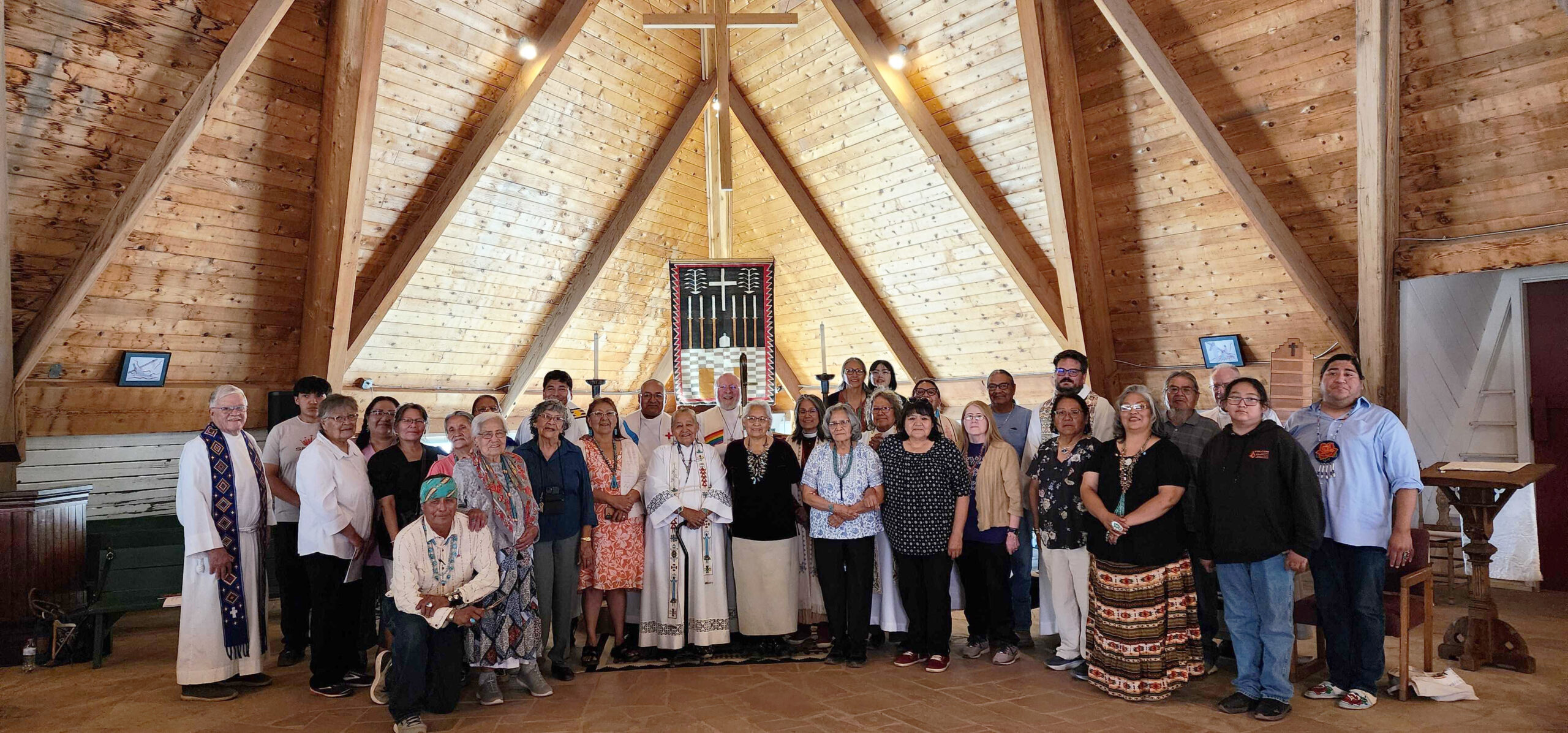
In June, people from across the Episcopal Church in Navajoland gathered at St. Christopher’s Mission in Bluff, Utah, for a Day of Discernment. The gathering had originally been planned as part of the process leading to the election of Navajoland’s first diocesan bishop. Two days before I was to leave to join the gathering, however, Bishop Barry informed me that the election had been postponed. The Day of Discernment and Convention would still proceed.
At first, my awareness was focused on the election. But upon arriving and entering into the Day of Discernment under the guidance of Jerry Begay, our invited Ha’ataalii, or traditional Diné ceremonial practitioner, a different awareness began to emerge. What surprised me most was that the day did not feel incomplete because no election took place. It felt complete because something more fundamental was taking shape among us.
The spirit of the gathering reminded me of the Hooghan Learning Circles, which invite us into a different way of gathering and learning together. Rather than beginning with agendas and decisions, we begin with listening: to one another, to the land, to silence, and to the wisdom carried by the community. Throughout the day, there was a growing sense that the work before us was not simply to make decisions, but to become a people capable of making them together.
Prayer created a rhythm that continually brought us back to what matters most. The guidance offered by Jerry Begay reminded us that leadership begins by recognizing our relationships with one another, with creation, with our ancestors, and with future generations. These were not separate moments added to the meeting. They shaped the spirit in which every conversation took place.
Some of the most meaningful moments happened away from the formal sessions. Sharing meals, talking in small groups, greeting old friends, and meeting new ones all became part of the work. We learned one another’s stories, heard hopes and concerns that might never surface in parliamentary debate, and discovered that trust grows through simple acts of presence as much as through formal discussion.
The absence of an election also created space for patience. Rather than experiencing delay as failure, many of us began to recognize that healthy leadership grows from healthy relationships. Before choosing who will lead, we are learning how to walk together. That may prove to be one of the most important foundations for the future of the Diocese of Navajoland.
Looking back, I encountered signs of hope throughout the day: in the quiet respect with which people listened, in the willingness to speak honestly, in laughter shared over meals, and in the deep reverence shown for the traditions that continue to shape this community. These moments revealed that the Diocese is already being formed, not only through structures and elections, but through the patient work of becoming a community that knows one another, trusts one another, and seeks the well-being of the whole.
Perhaps that is one of the deeper lessons of the Hooghan Learning Circles. They remind us that building a lasting future is less about reaching the next decision than about becoming the kind of community in which wise decisions can emerge. As we continue this journey together, the relationships we are nurturing today may become the strongest foundation upon which the future of the Diocese is built.