We Are Now Related
A Reflection of K’é Bee Hózhó
By The Most Reverend Dr. Don Tamihere
Archbishop & Primate, Aotearoa, New Zealand & Polynesia
My ancestors referred to the Gospel as Te Tino Waerea Ataahua – the Beautiful Faith that Clears the Way. To then be in Navajoland, from 31 July to 10 August 2025 as part of a four-nation pilgrimage, and to be among our Diné family who speak of Hózhó as the Beauty Way, felt like a homecoming for us.
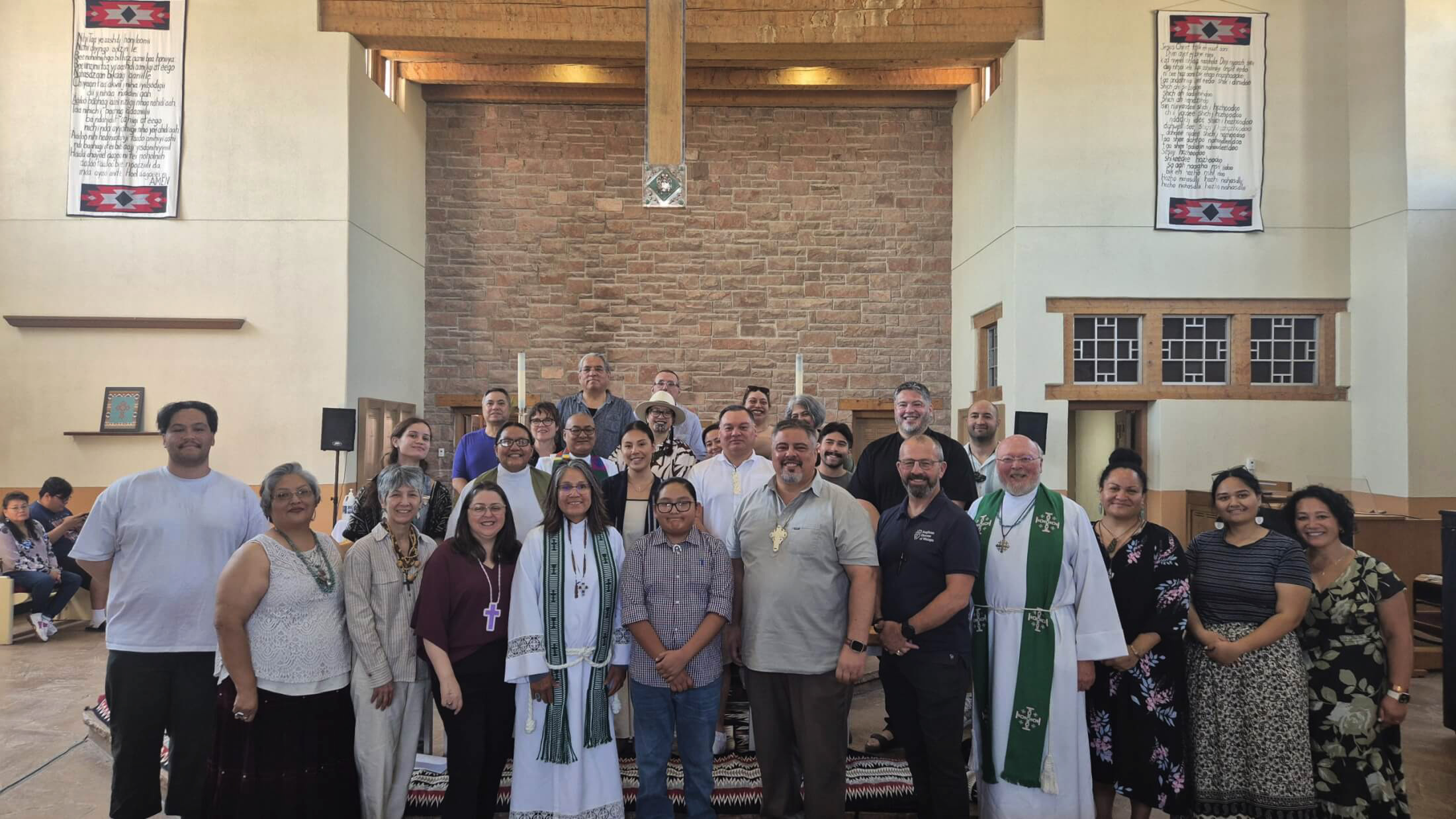
When we arrived at St. Christopher’s Mission in Bluff, Rev. Paula Henson welcomed us into the hogan-shaped church and set sacred stones at its center for each of the four sacred mountains. Then she touched them and said, simply, “We are now related.”
That is the first thing Navajoland gave us: the affirmation that we were never strangers.
The second was a photograph. At Good Shepherd Mission, I was shown an image from 1991 – my predecessor, Archbishop Whakahuihui Vercoe, standing beside Bishop Steven Plummer, and next to them, a small girl of eleven, Cathlena. Two elders, one from Aotearoa and one from Diné Bikéyah, and a young person who would grow up to be a priest. I looked at that photo and understood that we had not begun anything. We had simply arrived, thirty-four years late, at a meeting our ancestors had already convened. Bishop Steven himself visited Aotearoa and shared a dream that Navajoland would one day have an indigenous bishopric like ours. In June 2025, at the General Convention of TEC, after many years of prayer and persistence, that dream stood up and walked. To be among you there and in the weeks after was one of the great privileges of our ministry.
Navajoland changed us most, I believe, at Canyon de Chelly. Rev. Cathlena, that young person now grown to be an indigenous priest and leader, called it the holiest of holy places, and it is. At Spider Rock she told us the ancestral story of how Spiderwoman weaves patterns and gifts them to her people, and how men and women today weave beauty, grief and survival into a single cloth. That is hózhó as we came to understand it: not the absence of sorrow, but sorrow taken up and rewoven back into life. It is very close to what we mean by oranga ake – the abundant and flourishing life that Jesus promised.
We met God in your gracious hospitality. In the dawn pollen ceremony, facing east with the sun coming up over the desert. In making fry bread from corn flour, both familiar and strange to Māori hands. In Walter Shorty singing inside the hogan – “Creator, you are here with us on earth, bless us.” In Cornelia’s family hogan at the sheep camp, where she gave thanks to each mountain and finished facing the eastern doorway, so that the stories would not be kept inside. And in thirty pilgrims from four nations singing the Lord’s Prayer, each in our own tongue, all of it rising as one sound.
Why do these relationships matter? Because our peoples have too often been given dignity in word and denied it in structure. Standing together we are stronger, we are harder to overlook, and much harder to discourage.
To our beloved family of the Episcopal Church in Navajoland: self-determination is not the end of the road, it is the beginning of it. Do not be daunted. You have family all across the world, and that family is far larger than you imagined. We did not send mere thoughts and prayers – we turned up, and we will keep turning up to stand in solidarity with you.
We are all related.
Kia tau te rangimārie. Walk in beauty.
++Don.